Seven Secrets of South East London

Often we don’t explore the places we live in and can miss some real gems, sometimes because we think that “we can go there anytime” but then never do, or sometimes we just don’t even know about them. In London, we are spoiled with famous landmarks and historical buildings, and, consequently, some amazing sites that would make the top tourist spot in most smaller places can get completely ignored by most guide books.

I am writing this blog post during the Corona virus lockdown in London in May 2020 when we are urged to stay at home and only take exercise close to your home. So, what better time to revisit some of my all time local favourites. Most of them are, of course, closed to visitors during the lockdown, but you can enjoy the parks and paths around them. And hopefully visit soon, too! For now, stay safe, remember to socially distance and give way to others while on your walks!

1. Severndroog Castle

Severndroog Castle

For years, I used to walk past this tower on my Sunday walks and wondered what it was. It turns out to be a folly built in 1784 by Lady Anne James to commemorate her husband Sir William James, who gained fame for fighting pirates on the island fortress Survarnadurg (which became Severndroog in English) off the coast of India in 1755. The tower fell into disrepair but thanks to active local residents and fundraising, it was renovated to its former glory and finally opened to the public in July 2014. It now offers information about its history and magnificent views over London. On a clear day you can see seven counties from the viewing platform! Not surprising that it has been used as a lookout point during both world wars. You can also get tea and cakes in the downstairs café. It is not open daily, so check the opening times before going.


Severndroog Castle

Severndroog Castle in the winter of 2013 before the restoration

Severndroog Castle in the winter of 2013

How to get there: The closest train stations, Eltham or Falconwood, are 30 min walk away. Red Lion Hill bus stop on Shooters Hill or Oxlea Meadow stop on Rochester Way offer several bus connections to get you closer. You pass the castle on section 5 of the Green Chain Walk.

2. Oxleas Wood and Café

Oxleas Wood, South East London

Beyond Greenwich, off Shooters Hill where the highway men used to prey on 18th century travellers, you will find Oxleas Wood, one of the few remaining ancient woodlands in London, dating back at least 8,000 years. Different paths and walking trails, including the Green Chain Walk, crisscross between oak, silver birch, hornbeam and coppice hazel. Stop in the Oxleas Wood Café for a drink, ice cream or lunch. You will also find the Severndroog Castle within the woods.


Pictures: Oxleas Wood Café and Oxleas meadow in the summer and in the winter. The snow doesn’t come often unfortunately!

How to get there: The closest train stations, Eltham or Falconwood, are 30 min walk away. Red Lion Hill bus stop on Shooters Hill or Oxlea Meadow stop on Rochester Way offer several bus connections to get you closer. Sections 3 to 6 of the Green Chain Walk go into the woods.

3. Eltham Palace


Eltham Palace, South East London

This Art Deco gem is my very favourite palace in the world! Henry VIII and other royals have played and frolicked in this medieval palace across centuries but then it was left to go to ruin until a wealthy couple, Stephen and Virginia Courtauld, bought it in the 1930s. They renovated and decorated it in the most fashionable styles of the era and it again became a place of play for the rich and famous.  Its Art Deco interiors are beautifully restored and often used as film sets: think Hercule Poirot and other period dramas. Some medieval features, such as the banquet hall have been preserved. This English Heritage property has a wonderful garden, too. And, of course, a tea room and gift shop, too.

Eltham Palace Art Deco interior, South East London

How to get there: About 15 min walk from Eltham or Mottingham stations.

4. Red House

Red House, William and Jane Morris's home in Bexleyheath, London

This gem is the previous home of the artist power couple William and Jane Morris, showing off their bold designs and furniture (unfortunately I didn’t have any interior photos, so will have to pay another visit when it opens again). William Morris is perhaps the best-known name of the 19th century Arts and Crafts movement in Britain. The movement took inspiration from the Middle Ages and wanted to revive hand-made craft.

Morris’s friend architect Philip Webb was commissioned to design the house as a family home and a place to meet and work with their circle of artist friends. The couple moved into the house in 1860, but in the end only stayed there for 5 years. At the time, it was in the middle of countryside and became impractical for their work in London.

It probably intrigued them that the medieval pilgrims’ route to Canterbury passed close to the house.  Morris termed the passage which connects the main hallway to the house’s rear entrance, “The Pilgrim’s Rest”.

Red House, William and Jane Morris's home in Bexleyheath, LondonDetail of interior of Red House, Bexleyheath, London

The National Trust became the owner of the house in 2003 and it is now open to visitors.

How to get there: 15 min walk from Bexleyheath station.

If you want to learn more about William Morris and the arts & crafts movement, you can also visit the old Morris family home in Walthamstow in north-east London: The William Morris Gallery

5. Hall Place and Gardens

You will find this 16th century mansion on the banks of the River Cray at Bexley. It was first built in 1537 for Sir John Champneys, a wealthy merchant and former Lord Mayor of London. Stones recycled from the nearby Lesnes Abbey monastery, discontinued by the good old Henry VIII as a part of his dissolution of monasteries, were used to build the house. After Sir John, the house saw inhabitants, such as Sir Robert Austen, another wealthy merchant and his distant relative Sir Francis Dashwood, a politician and Chancellor of the Exchequer, though perhaps more interestingly the founder of the infamous Hellfire Club (maybe something for another blog post later), and Lady Limerick. It has housed schools and, during WWII, the US Army Signal Corps, who were intercepting German messages there. Now the property is managed by the charity Bexley Heritage Trust and it is open for visitors. Attractions include extensive gardens and a café, changing exhibitions, a wedding venue, a butterfly jungle and a plant shop.

5_HallPlace (6)

The unique Queen’s Beasts topiary planted in 1953 to commemorate the coronation of Queen Elizabeth II is one of the highlights, featuring such mythical animals as the griffin and the dragon.

How to get there: 20 min walk from Bexley and Crayford stations. Gravel Hill bus stop with several connections is a 5-min walk away.

6. Thames Barrier

6_ThamesBarrier (2)

What better way to explore London than on the river; take the Thames Clipper river boat from the Embankment or London Eye pier to Woolwich Arsenal, grab a glass of your favourite tipple from the bar, a window seat and just enjoy watching many of London’s most iconic sights pass by (well, it’s you that’s passing by, but you know what I mean): the Tower of London, the Tower Bridge, Cutty Sark, O2 Arena and eventually the colossal silver space oddity that is the Thames Barrier. This movable flood barrier, one of the largest of its kind, spanning 520 m (1,706 ft) across the river Thames, was built to stop many of the places you just passed from flooding during tidal surges. It has been in operation since 1982 and up to March 2020 has been closed 192 times. The 10 gates are tested once a month, with one full closure every year. You can find the closure dates here. It has an information centre and a café.

How to get there: 20 min walk from Charlton and Woolwich Dockyard stations. It is on section 3 of the Thames Path. Greenwich Trust bus stop with several connections is a 5-min walk away.

7. Lesnes Abbey ruins

7_LesnesAbbey (1)

7_LesnesAbbey (3)

The abbey dates from 12th century and was home to Augustinian monks, “black canons”, named thus for their black cloaks. It was pulled down in the 16th century, during Henry VIII’s rule. Only ruins remain. There are information boards and a café and a beautiful garden, including an ancient mulberry tree. The story goes that it was one of the 10,000 trees planted by King James I (well, not personally I would imagine) in the 17th century, because he wanted to start his own silk industry in England. Unfortunately, they planted black mulberry trees instead of the white which is the one silk moth caterpillars eat. The surrounding Abbey Woods has nice paths and is famous for its bluebells.

7_LesnesAbbey (4)

7_LesnesAbbey (6)

How to get there: 10 min walk from Abbey Wood station. It is on sections 1 and 2 of the Green Chain Walk.

Unless otherwise stated, all photos on this website are my own. All rights reserved, so please ask permission if you wish to use them.
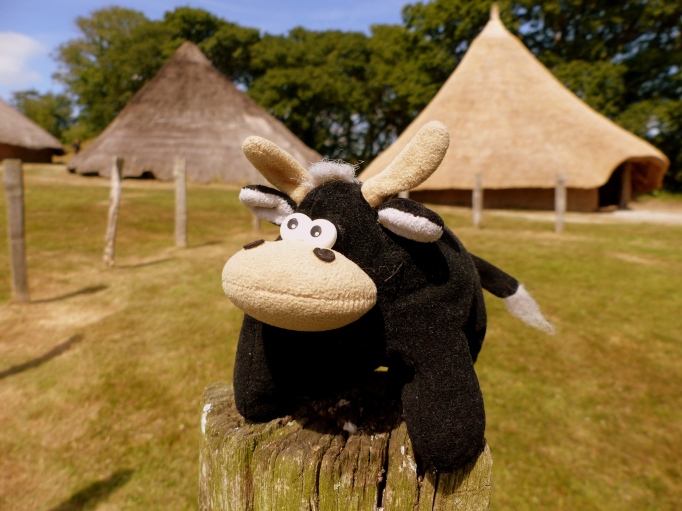
 

Castell Henllys – Iron Age Village with Pep the toy bull

My 7 Wonders of Wales

It has been disappointing how little I’ve progressed on my round-Wales walk over the past few years since I started in 2015. But on a positive note, I have started leading a round-Wales tour with Back-Roads Touring,  one of the tour companies I work for. The tour has taken me to some fabulous, familiar places but also to some surprising new gems that I had never heard of before. Did you know where in Wales you can find King Arthur’s round table or a reconstructed iron age hillfort? Who is Hedd Wyn and why are his chairs so significant? What is white wine in Welsh and if you don’t know, where can you go to learn? What is a coracle and why did the people in Birmingham get their water from Wales? Learn this and more in the next seven days during Pep Walks Wales month: a new item added to this post each day this week

Castell Henllys – Iron Age Village (7/7)

Castell Henllys – Iron Age Village

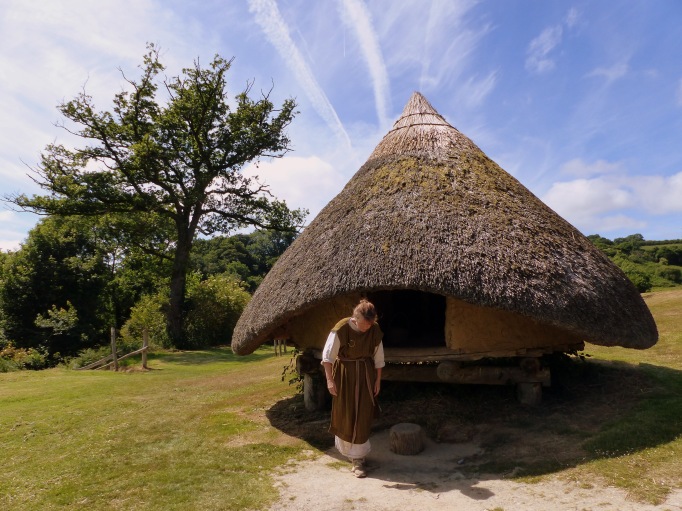
Castell Henllys is a reconstructed iron age hillfort near Newport in the Pembrokeshire Coast National Park. Extensive archaelogical excavations have been made on the site and it is known that there has been a settlement 2,000 years ago. The excellent guides and reconstructions really bring this fascinating village to life.

Further information about Castell Henllys

Again a little difficult to get to without a car unless you’re happy to walk about 30 min from the nearest bus stop by the Salutation Inn on A487 to the visitor centre and then another 10 minutes to the village. The bus service T5 – Aberystwyth – Haverfordwest via Newquay, Cardigan goes past the stop.

Nant Gwrtheyrn – the National Welsh Language and Heritage Centre (6/7)

Nant Gwrtheyrn – the National Welsh Language and Heritage Centre

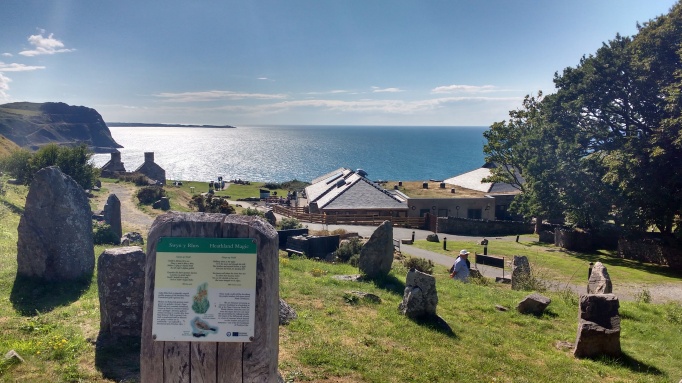
At the bottom of a thrilling drive down a steep hill on the Llŷn Peninsula in northwest Wales you will find Nant Gwrtheyrn or the Welsh Language and Heritage Centre. The centre, built on the remains of a former quarrying village, now offers Welsh language courses for adults. The courses range from longer residential courses to fun short tasters for tourists.

The location of the centre is very scenic and can’t wait for when I eventually get there on the Wales Coast Path (though at the rate I’m progressing on my plan, it will be in the next lifetime). There are many legends and interesting history related to the place, too. The deserted village was taken over by hippies for a period in the 1960s and the story is that to get them out, John Lennon himself bought them an island off the coast of Ireland.

Wales Coast Path sign in the ground of theNant Gwrtheyrn – the National Welsh Language and Heritage Centre

Further information about the the Welsh Language and Heritage Centre

It is not easy to get to Nant Gwrtheyrn without your own transport, but you can get to the nearest village, Llithfaen by bus from, for example, Pwllheli (25 min). The nearest bigger towns are Caernarfon to the north and Porthmadog to the east. But you really should be walking there on the Wales Coast Path!

Elan Valley – Victorian Dams (5/7)

Elan Valley

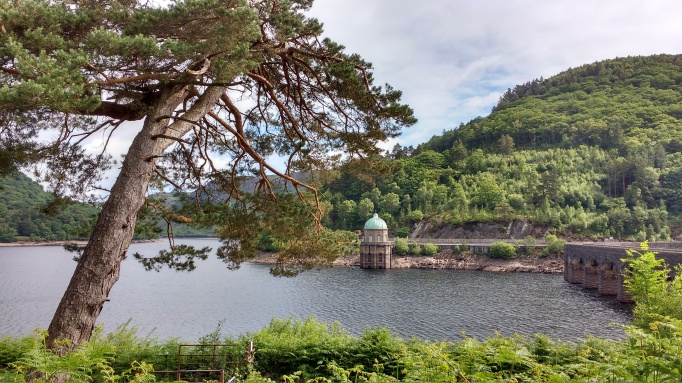
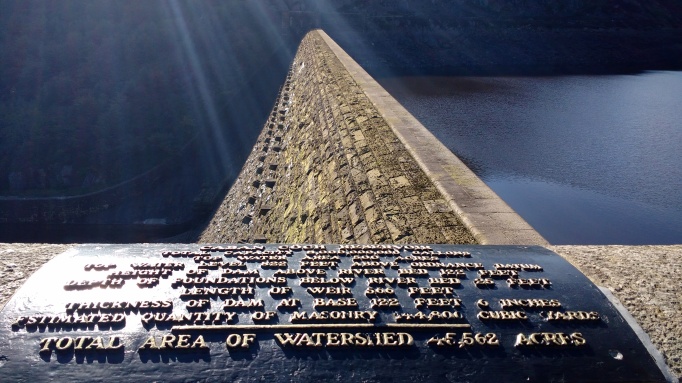
Near the town of Rhayader in mid-Wales, you will find the beautiful Elan Valley, where huge dams to cater for the water needs of Birmingham were built at the end of the 19th centrury. The location was selected because of – apart from being close to Birmingham obviously –  the shape of the valley, the type of rock and, naturally, because it gets a lot of rainfall. The four dams are a magnificent piece of Victorian engineering. They were opened in 1904 by King Edward VII and Queen Alexandra, and they are still very much in use. You can view one of these awe-inspiring structures from the visitor centre, or walk (drive/cycle) right up to it. The area is popular among walkers and cyclists with a variety of trails available. The area is also known for being the testing ground for the famous “bouncing bombs”, developed by Sir Barnes Wallis, used to attack German dams in WW2.

There is a café with great cakes, a gift shop and exhibitions in the Elan Valley Visitor Centre.

Caban Coch Dam, Elan Valley

Caban Coch Dam

Further information about the Elan Valley and the dams

You can get to Rhayader by bus from, for example, Llandrindod Wells (30 min) or Aberystwyth (1:10 hrs). From there, it’s still 6 km (3.7 miles) to the visitor centre, so you’d need to take a taxi if you don’t have your own transport (car, bike or legs). More information about transport options from here.

The National Coracle Centre (4/7)

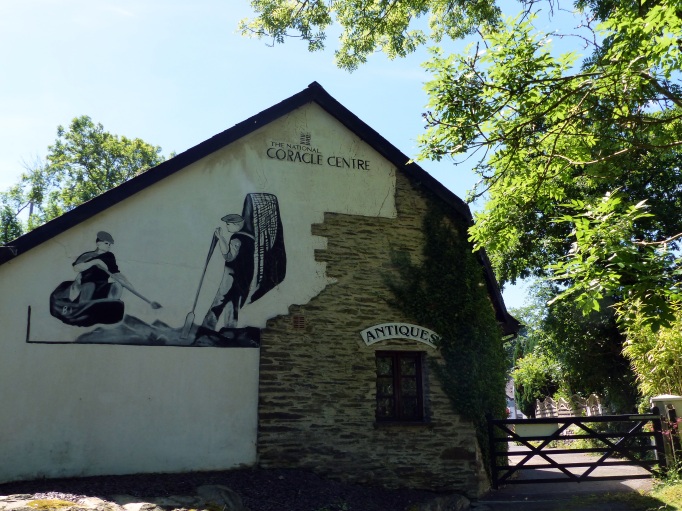
National Coracle Centre, Cenarth

I had no idea of what a coracle is before a visit to this wonderful, small museum in the village of Cenarth. Coracle is probably the oldest type of boat found anywhere and everywhere in the world. It is a light-weight, rounded vessel built with whatever material was available locally, with a body of wood/bamboo covered with animal hide. I highly recommend booking a guided tour with the host who will give you an entertaining and informative introduction to his collection of coracles from across the world, from Britain to Ireland and from North America to Tibet.

Cenarth is a charming, small village on the river Teifi, on the border between Ceredigion and Carmarthenshire in Western Wales. It is famous for its salmon leap and Cenarth falls and the 18th century bridge with a couple of tea rooms and gift shops and a pub.

Cenarth falls and old mill

Cenarth falls and the old mill

Further information about the National Coracle Centre

You can get to Cenarth by bus from, for example, Cardigan (15 min) or Carmarthen (1 hour). Travel information

Yr Ysgwrn, the home of the poet Hedd Wyn (3/7)

View from Yr Ysgwrn, Poet Hedd Wynn's House

A view from the house

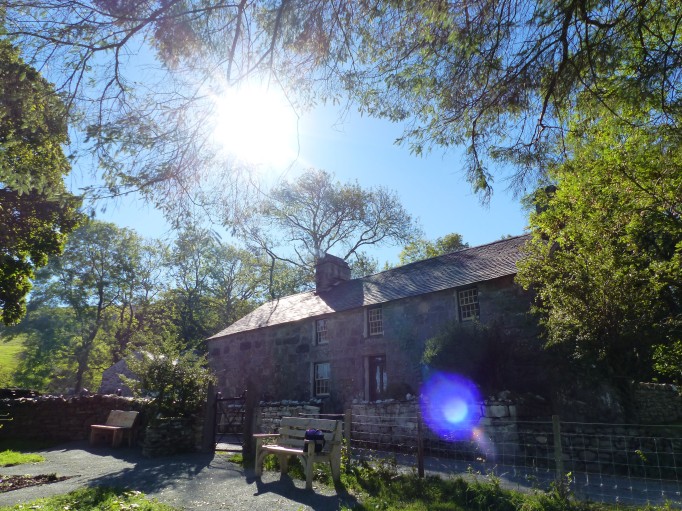
Yr Ysgwrn is the home of Ellis Evans (13 January 1887 – 31 July 1917), a farmer and a chair-winning Welsh poet, who tragically died at a young age in WW1. A chair-winning poet? I hear you raise your eyebrows. Indeed, a chair is the traditional prize awarded to winners in Welsh bardic competitions called Eisteddfod. Welsh poets were also traditionally given bard names, and Ellis Evans’s bard name is Hedd Wyn, “the blessed peace”.

Hedd Wyn won several local and regional chairs, the first at the age of 20. He was awarded the national chair post-humously in 1917. He wrote the winning poem on his leave during the war, then forgot it at home, re-wrote it on the way back to the front, and send it to the National Eisteddfod under pseudonym Fleur de Lys. When the winners were announced and his real name revealed, he was not there to collect his prize. Once the audience learned the sad news of his death only a couple of months before in a battle in Belgium, the chair was draped in black cloth and has ever since been known as the “black chair”.

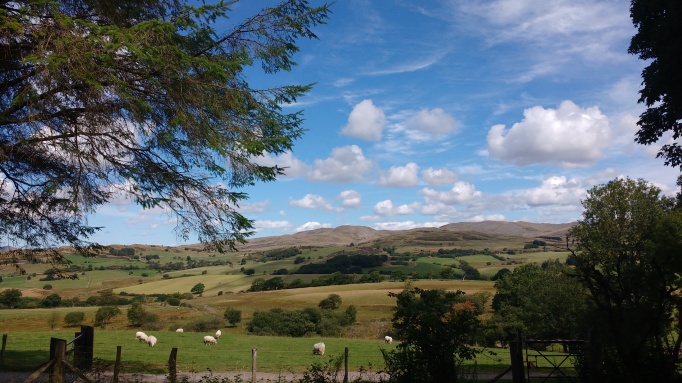
The farm, located in the middle of the Snowdonia National park, is now a museum where you’ll find all his famous chairs, among other things. There is also a visitor centre with a gift shop and a tea room, not to mention amazing vistas.

Yr Ysgwrn, Poet Hedd Wynn's House

Hedd Wyn’s Home

Hedd Wyn wrote in Welsh, but here is an English translation of one of his most quoted poems:

Rhyfel (“War”):

Why must I live in this grim age,
When, to a far horizon, God
Has ebbed away, and man, with rage,
Now wields the sceptre and the rod?

Man raised his sword, once God had gone,
To slay his brother, and the roar
Of battlefields now casts upon
Our homes the shadow of the war.

The harps to which we sang are hung,
On willow boughs, and their refrain
Drowned by the anguish of the young
Whose blood is mingled with the rain.

Further information about Yr Ysgwrn and Hedd Wyn.

The nearest town and train station is Blaenau Ffestiniog (16 km/10 miles away) and the nearest bus stop in the village of Trawsfynydd (1.6 km/1 mile away).

Wine-tasting in Wales – Whitecastle Vineyard (2/7) 

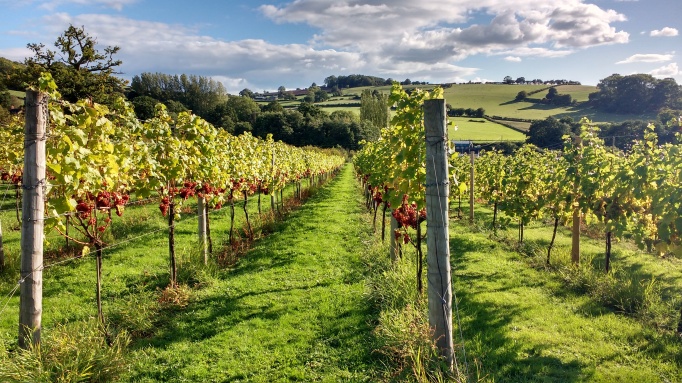
View of White Castle Vineyard, Monmouthshire, Wales

A visit to Wales would not be complete without tasting some local wine, right? Eh? – you may say. Yes, Britain including Wales is very up and coming in wine-making in these days of changing climate. They are winning prizes left, right and centre, particularly for sparkling and white wines. The growth of wine production has been dramatic in the past 10 years: In England and Wales, there are now 2,500 hectares under vine, over 500 commercial vineyards, and about 150 wineries (2018). Even the French producers are buying land in the UK to safeguard their future production.

You can visit many of the wineries and do some tasting. Robb and Nicola Merchant welcome visitors in their small, 2-hectare (5-acre) Whitecastle Vineyard in the village of Llanvetherine, within the rolling green hills of Monmouthshire. I love my wine but couldn’t distinguish a hint of grapefruit from a suggestion of elderflower, so if you you’d like a more knowledgeable introduction to the award-winning wines from the Vineyard, check out a blog post by Heidi on the Lees.

Or better yet, book a visit and tasting to the vineyard!

All I’d like to say that their white wine Gwin Gwyn – which means white wine in Welsh by the way – that I bought on my first visit went down very well, and I’ve been buying a bottle on every visit ever since! You can even adopt your own vine!

More information about White Castle Vineyard

Whitecastle Vineyard is 11 km (7miles) from Abergavenny train station, with frequent connections to Newport (25 min) and Cardiff (35 min). From there it’s probably best to take a taxi if you don’t have your own transport. More information about public transport to Abergavenny.

Or it’s only about 1.5 km detour (one way) from Offa’s Dyke Path, one of the National Trails in the UK.

You can find further information about wineries to visit in England and Wales through WineGB website. WineGB is the national association for the English and Welsh wine industry.

Caerleon – roman history  (1/7)

Pavement stone on the street in Caerleon, Wales

What did the Romans ever do for us? Aside from the sanitation, education, medicine, wine, public order, irrigation, roads, the fresh-water system, and public health, quoting the classic Monty Python film, Life of Brian. Well, in Wales, among other things, they built a huge legionary fortress by the river Usk around 75 AD. They called it Isca Augusta, Isca being what they called the river and Augusta for the Second Augustan legion that occupied the fortress. Now we know the town as Caerleon, “the city of legion”.

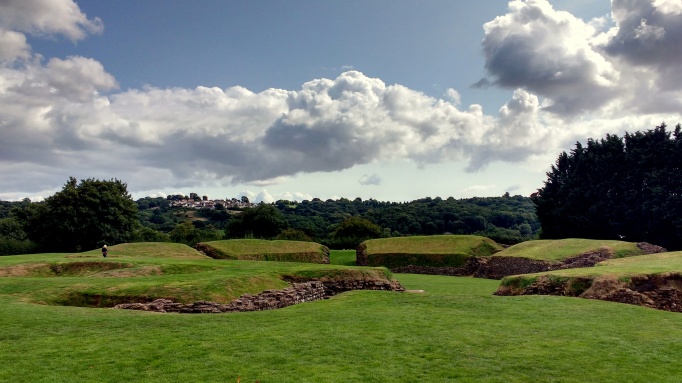
Caerleon offers a fantastic glimpse of Roman life in Wales: the remains of the barracks of the legionaries and Roman baths, and the most complete amphitheatre in Britain. All of these you can see within easy walking distance from each other in central Caerleon. And then have them all explained to you in the Wales National Roman Legion Museum, one of the seven museums under the umbrella of National Museum of Wales.

In the middle ages it was believed that Caerleon was the location of King Arthur’s court and that the fabled round table was actually the Roman amphitheatre.

Further information about Caerleon

Caerleon is about 8 km (5 miles) from Newport with a frequent train connection (about 15 min) from Cardiff.

The Roman amphitheatre in Caerleon, Wales

The Roman amphitheatre in Caerleon. Was this the fabled round table of King Arthur?

The travel information was checked at the time of writing in August 2019 but they are bound to change. Good sources for public travel information in UK/Wales are www.nationalrail.co.uk for trains across the UK and www.traveline.cymru for trains/buses in Wales.

Unless otherwise stated, all photos on this website are my own. All rights reserved, so please ask permission if you wish to use them.

Undredal Norway

Seven reasons to visit Western Norway

For the past few years, I have been working as a tour leader for a UK tour company Back-Roads Touring (known as Blue-Roads Touring in the US). I have been privileged to lead their Norway tours and I am really looking forward to the new season which sees some changes: we have kept and brought back many of my favourites and included a few new exciting places. This week I’ll be visiting some of the old favourites as I’m preparing for the new season. A new place added to the blog post each day of the week! Keep tuned in!

Or check out previous posts about fjords and glaciers in the region.

Goats in Undredal Village

1.Undredal Village

Undredal is a tiny beautiful village in the heart of the Western fjords region. While nearby Flåm is heaving with tourists from cruise ships and tour buses, queueing to buy Norwegian souvenirs and being herded to the scenic but busy Flåm train, in Undredal you’re surrounded by free-roaming goats and serene mountain and fjord views. Undredal is the place to try the famous Norwegian brown cheese, caramelised goat’s cheese.

Brown cheese, UndredalUndredal Village, Norway

Read more about fjords and another picture of Undredal in my fjords post.

Garmo Stave Church in Maihaugen Heritage Museum in Lillehammer

Garmo Stave Church in Maihaugen Heritage Museum in Lillehammer

2. Stave Churches

It is estimated that over a thousand of these medieval architectural wonders were built between the first half of the 12th century and 1350 when the black death decimated the Norwegian population and there was no need for new churches for a while. A stave church gets its name from the characteristic bearing columns, called “stave”. They typically have cascading tier-roofs and are decorated with carved dragonheads.

Five of the remaining 29 stave churches can be found in the Western fjord region: Urnes Church is the oldest, built in ca. 1130, and a UNESCO heritage site, Borgund the most authentic, Undredal the smallest. Kaupanger was restored to its original glory in the 1960s, and Hopperstad Stave Church in Vik has the only remaining chancel screen preserved from the middle-ages, probably from 1200s.

Detail of Lom Stave Church

Detail of Lom Stave Church

Undredal Stave Church

Undredal Stave Church


Vøringsfossen Waterfall, Norway

Vøringsfossen Waterfall with the red Fossli Hotel in the background.


3. Vøringsfossen Waterfall

Norway is sometimes called the land of thousands of waterfalls, maybe an exaggeration but I dare you to count. Tip: there are more of them and they are at their most spectacular in May/June when the snow is melting in the mountains. But don’t worry, there are plenty to see you through the whole summer. Vøringsfossen near the village of Eidfjord is one of the most spectacular with a total drop of 182 meters and freefall of 145 meters. The famous Norwegian composer Edvard Grieg used to frequent the area and is said to have composed his Opus 66 in the nearby Fossli Hotel.

Vøringsfossen Waterfall, Norway Vøringsfossen Waterfall, Norway

Fjaerland book village

Fjaerland book village

4. Fjaerland Village

One of my very favourite villages in the region is Fjaerland. It has an amazing location at the bottom of one of the arms of Sognefjord and the Jostedalsbreen Glacier. This village of less than 300 people belongs to the international network of book towns and is filled with second-hand book shops. It is a good base to explore the Jostedalsbreen glacier and has an award-winning glacier museum.


A fjord view from Syse Farm, Ulvik

A fjord view from Syse Farm, Ulvik

5. The Cider Route

The region around Hardangerfjord is known for its apple orchards and apple juice and cider. In the beautiful village of Ulvik, you can follow a cider route on foot, bike or by car, visiting different farms and tasting local produce.

Bergen View

6. Bergen

Bergen, the second city of Norway, is the gateway to the fjord region. It is famous for its colourful wharf houses of the mediaval Hanseatic League, now a UNESCO heritage site, and the fish market. But remember to step away just a block or two away from these sights, and you’ll discover quiet streets with quaint wooden houses and you’re never far away from a mountain to climb (or if you don’t have the time or energy, there is a furnicular to take you up.

Dalsnibba View

7. Dalsnibba

It boasts being the highest fjord view and it may be true – at least a view point accessible with a car rather than on foot or flying. And the view to the famous Geiranger fjord is magnificent – weather permitting. I’m not sure if I’ve been lucky or not, but of the dozen or so times I’ve been up there, only once the view was completely hidden by clouds. If you are unlucky with the weather, you can try to get lucky with the live webcam later on. And just the drive up the mountain is a thrill.

Dalsnibba View